Rome
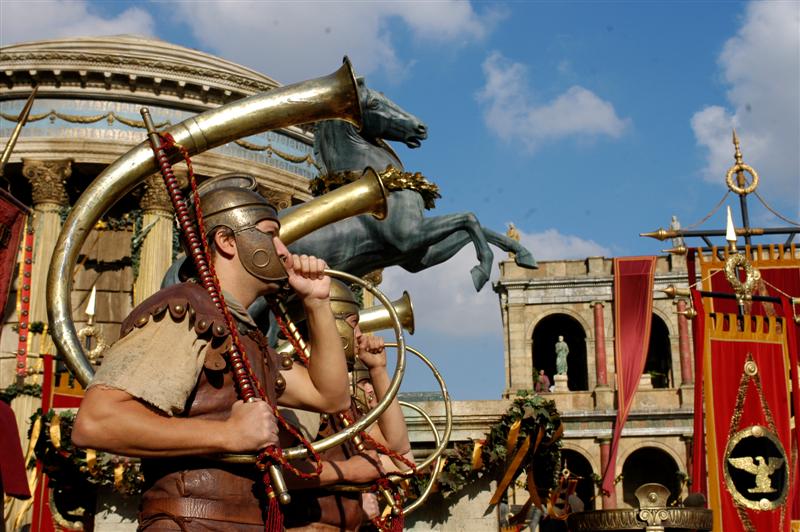
According to experts, the Romans used three basic types of brass instruments: the cornu, the tuba and the lituus.
The lituus was most often used for funeral processions and religous ceremonies. The tuba and the cornu were used in war and for gladiator contests, drama performances and other important events.
The cornu was sometimes pictured playing with a hydraulis, a type of organ powered by air pumps and water.
When the cornu was used in the army, some experts think the cornu might have played lower notes because it was signaling instrument and these could be heard of a greter distance across battlefields than high notes.
4-4-8 Breathing
1. Breath in through your mouth for a count of 4 beats.
2. Hold your breath for a count of 4 beats.
3. Release your breath through your mouth for a count of 8 beats.
4. Without a break, breath in again for a count of 4, repeating the entire technique 3-4 times in a row.
Focus on counting when breathing in, holding the breath, and breathing out.
Repeat with your mouthpiece.
Mouthpiece Challenge
Set your embouchure up on the mouthpiece.
The goal is to only use your air to change the pitch.
Take a breath whenever you need to!
When you keep the opening the same and blow faster, the pitch will go up, and when you blow slower, the pitch will go down.
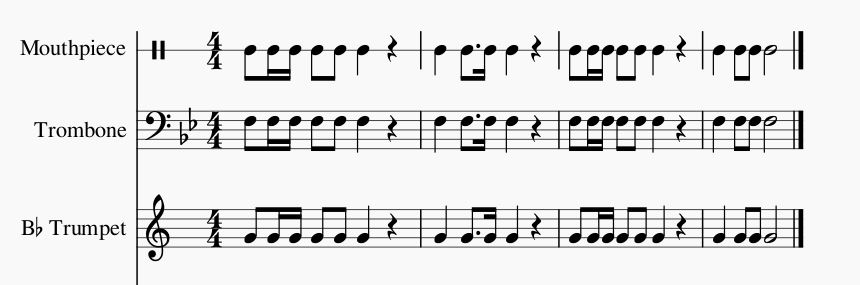
Rhythm Challenge (Mouthpieces)
Rules
Technique activity
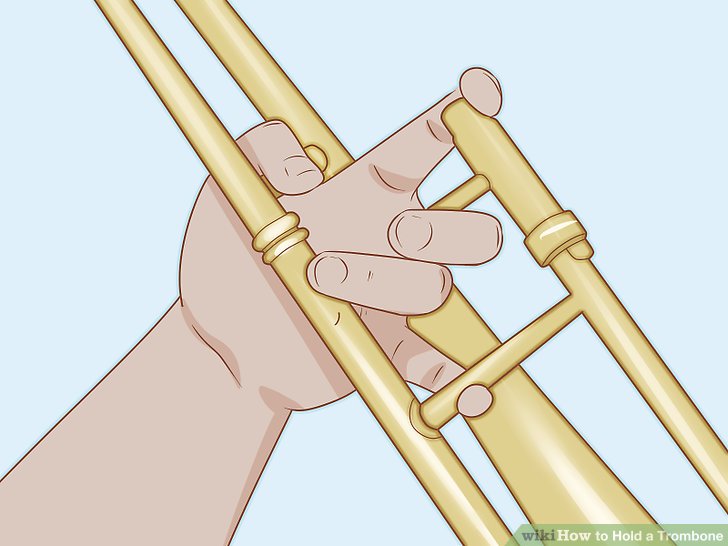
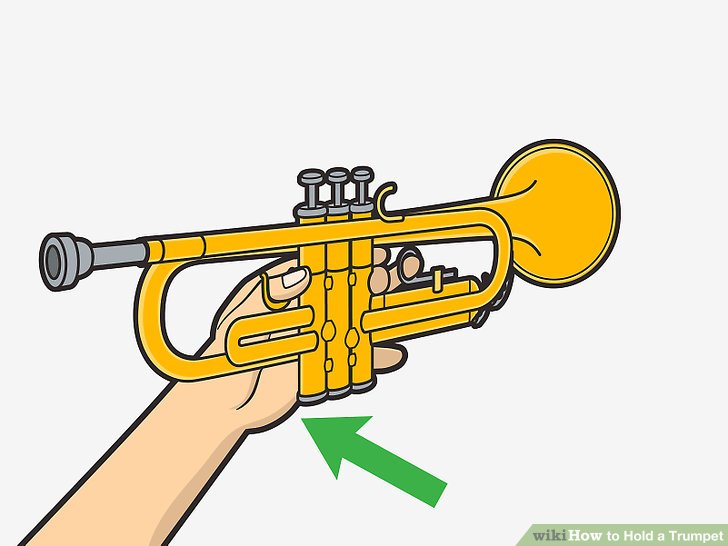
Hold the instrument with your left hand and move the slide or press the pistons with your right hand.
Technique activity
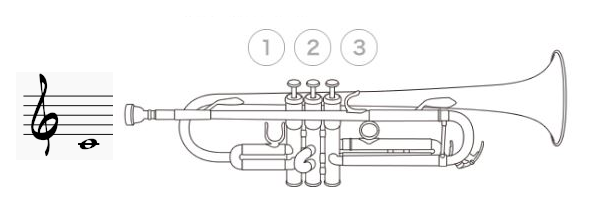
Let’s review the notes we know:
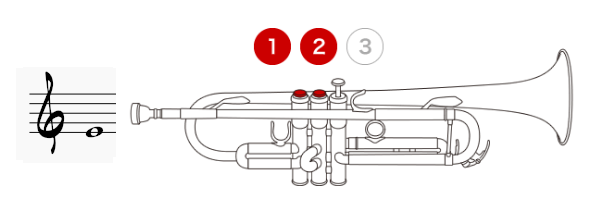
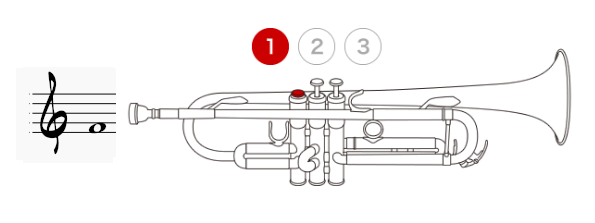
Trumpet: C or G
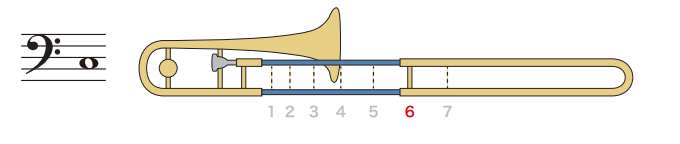
Trombone: Bb or F
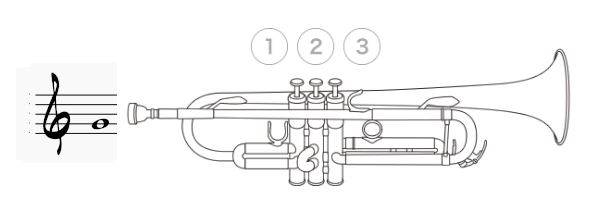
Let’s review the notes we know:
Trumpet: D
Trombone: C
Let’s review the notes we know:
Trumpet: E
Trombone: D
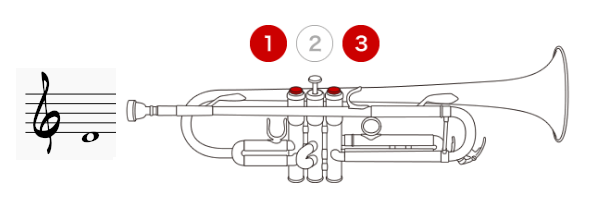
New Note!
Trumpet: F
Trombone: Eb